.png?width=1563&height=518&name=White%20Logo%20-%20Acadiana%20Rooter%20(1).png "White Logo - Acadiana Rooter (1)")

How to Shut Off Your Water During a Plumbing Emergency
To shut off your water in an emergency, turn the main shutoff valve clockwise until it stops. In most Lafayette-area homes, that valve is either...
7 min read
|
To shut off your water in an emergency, turn the main shutoff valve clockwise until it stops. In most Lafayette-area homes, that valve is either inside the meter box near the street or on the exterior wall where the water line enters the house. |
In our experience, most homeowners don't know where their shutoff is until the moment they need it. By then they're standing in water, on the phone, trying to describe what they're looking at.
A failed supply line can put between 8 and 30 gallons, depending on the size, into a home in a matter of minutes. Whether that ends up as a repairable leak or a full flooring replacement often comes down to how quickly someone found the valve. It's worth ten minutes this weekend to locate yours and make sure everyone in the household knows where it is.
Here's what you need to know.

The main water shutoff in most Lafayette and Broussard homes is either inside the meter box near the street or on an exterior wall where the supply line enters the house.
If you've moved here from another part of the country, this may not be where you'd expect. We build on slabs in this region, so there's no basement and rarely a crawl space, which means no interior floor-level valve.
Start with these locations:
Once you've found it, photograph it and share the picture with everyone in the house. It's also worth clearing the area while you're there. We frequently find meter boxes buried under mulch, overgrown with grass, or fitted with a cracked lid full of dirt. None of that matters on a Tuesday afternoon, and all of it matters at midnight.
Ben's Tip: Many meter box valves need a meter key to turn, not your hands. They run about $15 at any hardware store. Buy one now and hang it in the garage. Trying to find one at 11pm is a bad night.
Turn the main shutoff valve clockwise. A lever-style ball valve needs a quarter turn, and a round wheel-style gate valve needs several full rotations before the water stops.
One detail that catches people off guard: you'll often find two valves in the meter box. The one on the house side of the meter is yours to operate. The one on the street side belongs to the utility and should be left alone unless they advise otherwise.
Yes. Most toilets, sinks, and appliances have their own shutoff valve, so if you can see exactly where the water is coming from, you can stop it without cutting water to the entire home.
That's usually the better approach for a single fixture. Here's where to look:
One caution worth taking seriously. These valves are often decades old, and on a home with rusted pipes they're frequently the first component to fail. If the handle won't turn, spins without resistance, or begins weeping around the stem, stop and go to the main instead. Forcing a corroded stop valve is a common way to turn a slow drip into an open line.
Once the water is off, shut down your water heater, document the damage, and leave the water off until a plumber has assessed the problem.
If the valve is seized, spins freely without engaging, or continues to leak after you've closed it, stop there. Forcing a corroded valve can snap the stem, which leaves you with an open line and no way to close it.
Call a licensed plumber any time water is running that you can't stop, or when what you're seeing points to a problem inside a wall, under the slab, or out in the yard.
Several situations aren't judgment calls. Reach out if you notice any of the following:
Working with a plumber who knows this area matters more than most homeowners realize. Slab foundations, a high water table, clay soil that shifts with the seasons, and cast iron sewer lines under older Lafayette neighborhoods all produce failure patterns you learn by working on homes here over time. Acadiana Rooter is veteran-owned and led by Ben Tucker, a licensed Master Plumber who has built his career on Acadiana homes.
We'd rather take a call that turns out to be nothing than get one after the damage is done.
Most emergency shutoffs trace back to something that was visible months earlier: an aging supply line, a slowly corroding valve, or a sewer line deteriorating under the yard.
Ben's Tip: Want to know if you have a hidden leak right now? Turn off every fixture in the house, then look at your water meter for the small triangle or star that spins with flow. If it's moving with nothing running, water is going somewhere it shouldn't.
 At Acadiana Rooter Plumbing, we take pride in providing reliable, honest, and professional plumbing services across Lafayette, Broussard, Youngsville, and the surrounding Acadiana area. From drain cleaning and pipe repair to water heater installation and backflow testing, our licensed plumbers handle every job with precision and care. As a veteran-owned company, we’re committed to serving our community with integrity and craftsmanship you can trust.
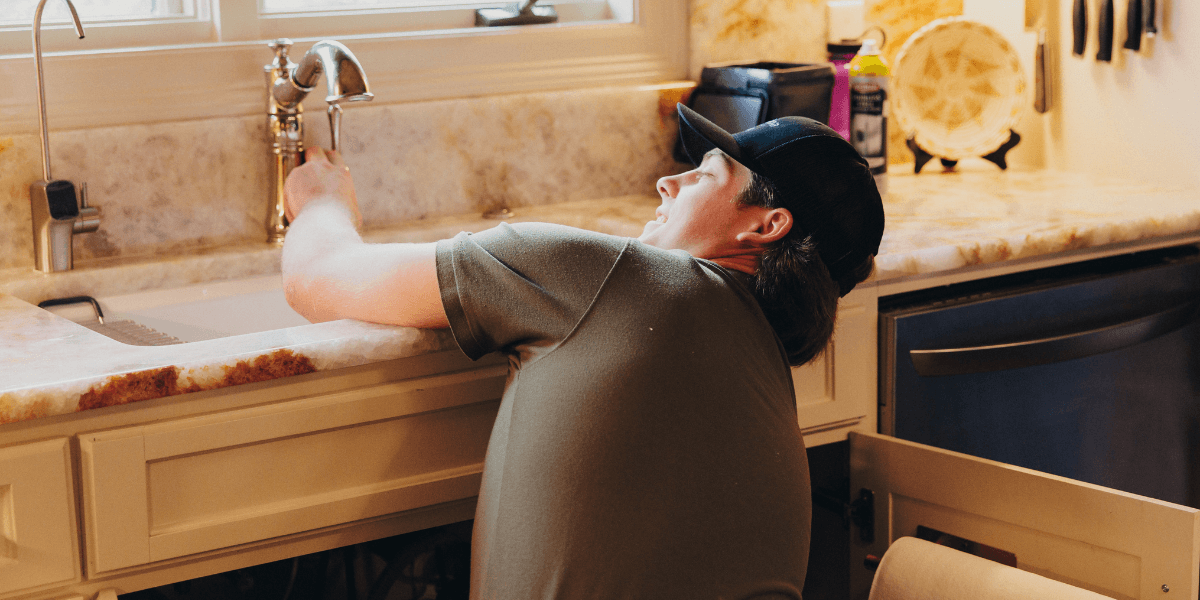
To shut off your water in an emergency, turn the main shutoff valve clockwise until it stops. In most Lafayette-area homes, that valve is either...
.png)
Acadiana Rooter Plumbing was proud to serve as a VIP Sponsor of the 2026 Broussard Independence Festival - a Fourth of July celebration hosted...
Most drain and sewer line damage in Louisiana homes traces back to three things: grease, wipes, and chemical drain openers - often used for...